The most common mistake when buying a generator is sizing it by guesswork. An undersized set trips the first time it is loaded; an oversized one means higher investment and engine problems caused by running at low load. The right rating comes from looking at the load list, starting currents and future growth together.
The difference between kVA and kW
Generators are rated in kVA (apparent power), while your equipment consumes kW (real power). The link between them is the power factor. Generator sets are normally rated at a 0.8 power factor:
kW = kVA × 0.8 | kVA = kW ÷ 0.8
For example, a 220 kVA generator delivers about 176 kW of real power.
1. List your loads
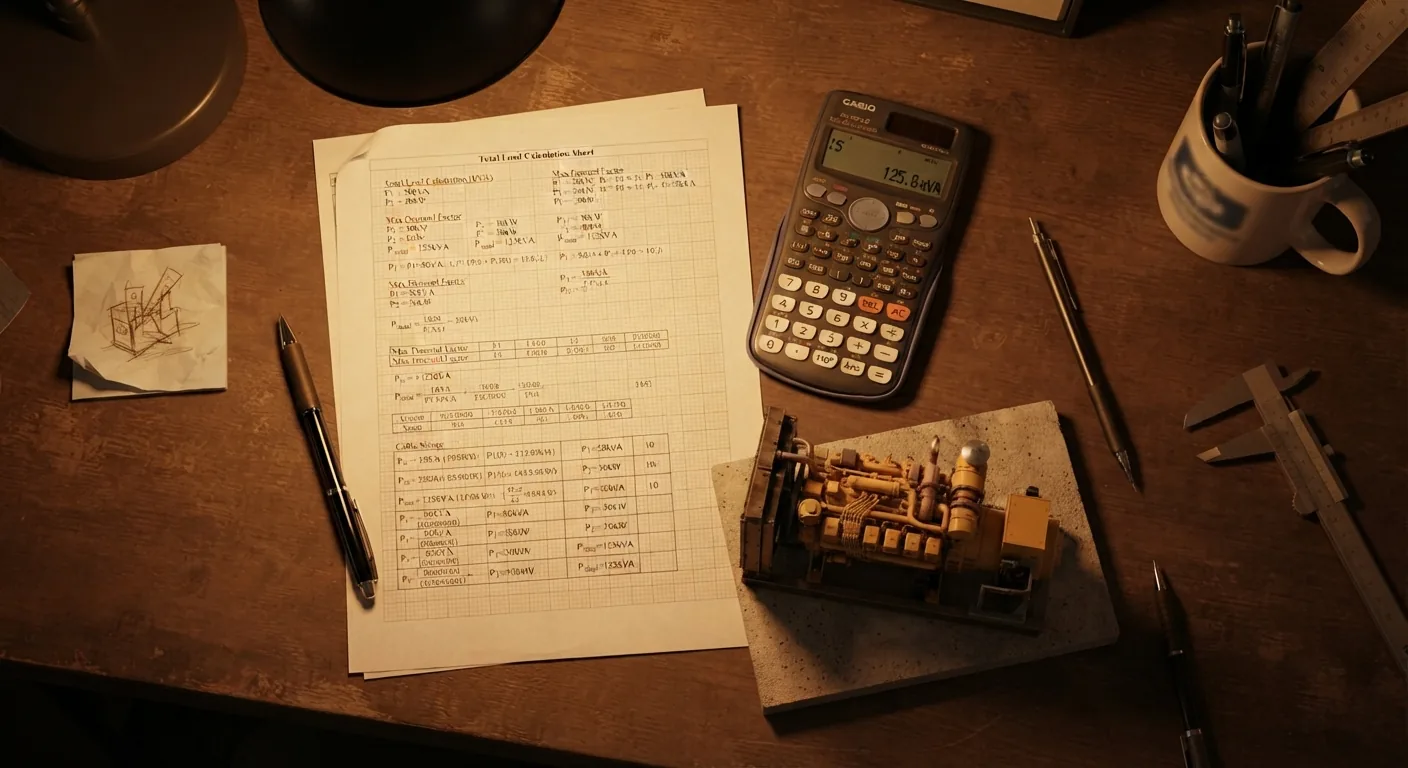
List every item the generator will supply and its power: lighting, socket circuits, air conditioning, lifts, pumps, cold rooms, kitchen equipment and UPS systems. Use a realistic diversity factor to allow for the fact that not everything runs at once – but for critical loads (hospitals, server rooms, cold chain) use the full load.
2. Don't forget motor starting
Induction motors started direct-on-line draw 6–7 times their rated current. A large pump or lift motor can cause a serious voltage dip even when your total load is modest. Star-delta starters, soft starters and variable speed drives (VFDs) reduce starting demand significantly, so the sizing must state how each motor is started.
3. Spare capacity and growth
Adding around 20–25% to the calculated load covers sudden load steps and leaves room for future additions. On the other hand, running a diesel generator for long periods at very low load (below roughly 30%) leads to unburnt fuel build-up (wet stacking). The right choice is neither too small nor too large.
4. Standby or prime?
For a backup generator that runs during mains failures, size against the standby rating. Where there is no mains supply or the generator runs continuously – construction sites, off-grid facilities – size against the lower prime rating.
Worked example
Suppose a mid-size hotel in Kyrenia needs to supply 140 kW of essential loads during an outage:
- 140 kW ÷ 0.8 = 175 kVA
- 20% spare capacity: 175 × 1.2 = 210 kVA
- Suitable choice: Cat DE220 GC (220 kVA)
If lifts and large pumps start direct-on-line, a motor starting analysis may point to the next size up.
Site conditions
High ambient temperature, altitude and poorly ventilated plant rooms all reduce output. In the hot Cypriot summer, air inlet and outlet design and exhaust routing in enclosed generator rooms matter as much as the rating itself.
Send us your load list and we will work out the site survey, load calculation and the right Cat generator model with you.
Frequently asked questions
How many kW is 1 kVA?
At the standard generator power factor of 0.8, 1 kVA is about 0.8 kW.
How much bigger should my generator be than my load?
Typically 20–25% spare capacity is added to the calculated total load, and motor starting is checked separately.