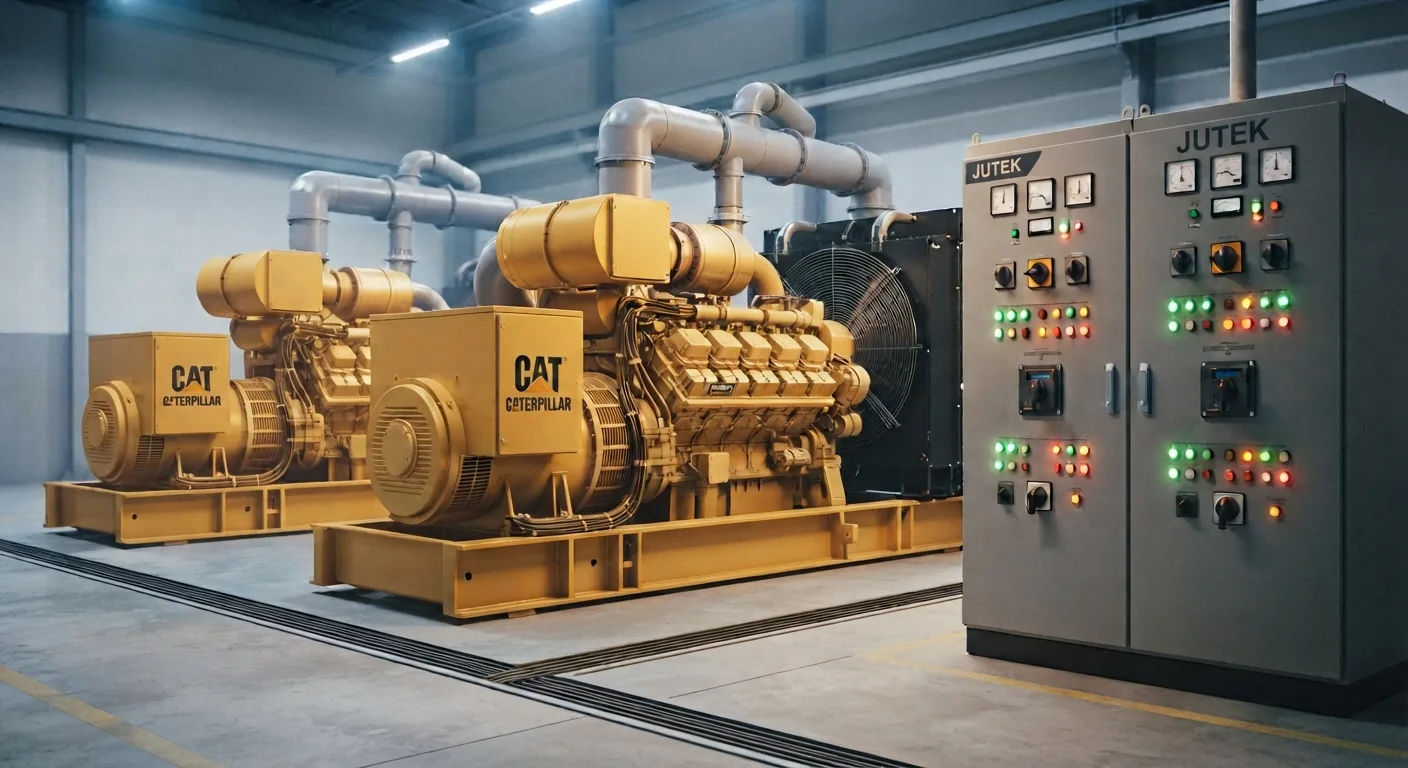
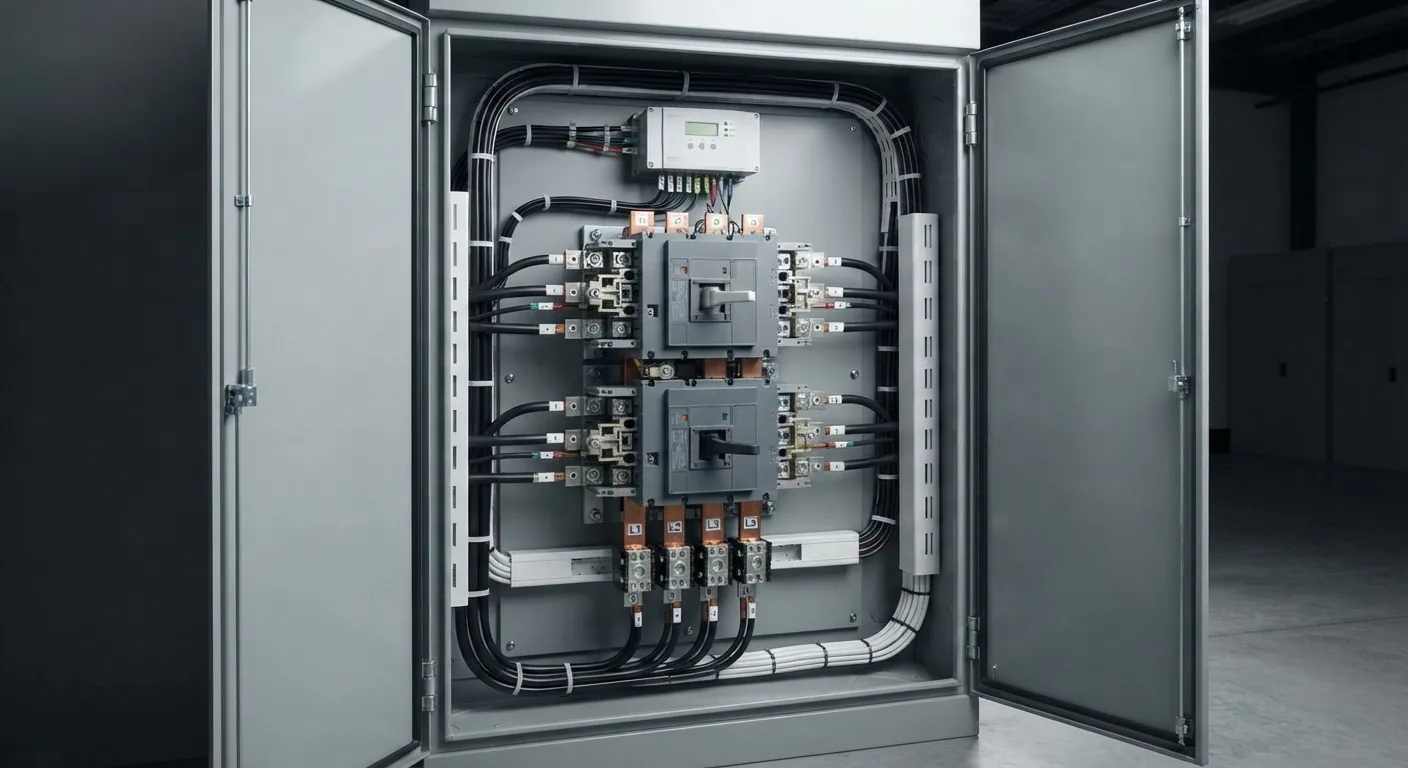
An ATS (automatic transfer switch) panel transfers your loads to the generator automatically when the mains fails, and back to the mains when it returns. It is the system that makes a standby generator take over "by itself".
How does an ATS panel work?
- Mains monitoring: the controller continuously monitors mains voltage and frequency
- Start signal: on a mains failure or phase loss, after a short delay, the generator is told to start
- Load transfer: once generator voltage and frequency are stable, the load is transferred – usually within seconds
- Return: when the mains comes back, it is monitored for stability for a while, then the load returns to the mains
- Cool-down: the generator runs off load for a period to cool down, then stops
Why is interlocking essential?
Connecting the mains and the generator to the load at the same time can seriously damage the generator and the network, and is life-threatening for crews working on the mains side. ATS panels therefore use both electrical and mechanical interlocking.
Motorised breakers or contactors?
At low and medium ratings, contactor-based ATS panels are an economical solution. At higher currents and where short-circuit withstand matters, motorised moulded-case or air circuit breakers are preferred. The choice depends on generator rating, fault level and how critical the site is.
3-pole or 4-pole?
Depending on the earthing system and the installation, the neutral may also need to be switched. The wrong choice can cause nuisance tripping of RCDs or neutral problems, so this should be decided at design stage.
Closed transition
A standard ATS has a very short break during transfer. Where even the return to mains must be break-free – hospitals or data centres, for example – closed-transition systems briefly synchronise the generator with the mains.
Testing and maintenance
An ATS panel needs maintenance just like the generator. Automatic transfer should be tested regularly by simulating a real mains failure, and connection tightness and breaker mechanisms should be checked.
JUTEK builds ATS and synchronising panels in its own factory with EAE enclosure systems and installs and commissions them together with the generator.
Frequently asked questions
What does an ATS panel do?
When the mains fails it starts the generator and transfers the load to it automatically, then transfers back to the mains when the supply returns.
Why does an ATS panel need interlocking?
Electrical and mechanical interlocking together prevent the mains and the generator from being connected to the load at the same time.