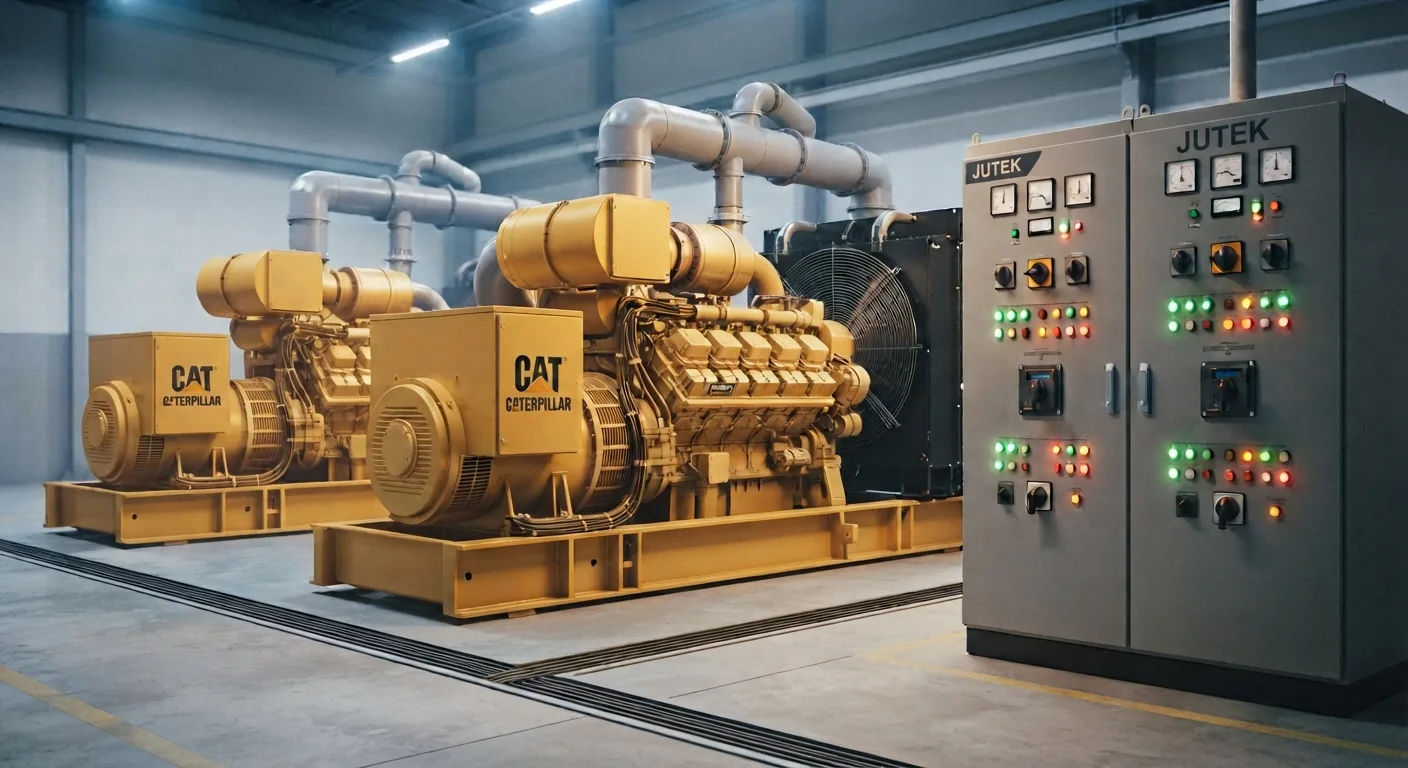
Synchronisation means connecting two or more generators (or a generator and the mains) to the same busbar so they work together as a single power source. In large hotels, hospitals, shopping centres and industrial sites, running several synchronised generators instead of one large unit improves both security of supply and efficiency.
Conditions for paralleling
Before a generator can be connected to the busbar, the following must match the bus:
- Voltage: magnitudes must be very close
- Frequency: speeds must be matched (50 Hz)
- Phase sequence: L1-L2-L3 rotation must be the same
- Phase angle: the waveforms must be at the same point at the same time
Closing the breaker without these conditions puts severe mechanical and electrical stress on the engine, alternator and coupling. That is why a synchronising controller decides the moment of closure automatically, while a sync-check relay prevents closing at the wrong moment.
Load sharing
Once connected, the generators must share the load evenly. Real power (kW) is shared through the engine governor and reactive power (kVAr) through the alternator's automatic voltage regulator (AVR). Uneven sharing can overload one set and trip it off line.
Benefits of a synchronised system
- N+1 redundancy: the site stays powered even if one unit fails or is under maintenance
- Load-dependent start/stop: some sets stop at low load, cutting fuel and maintenance costs
- Step-by-step growth: new generators can be added as the site grows
- Mains parallel: seamless return to mains and peak shaving applications
Synchronising panel and automation
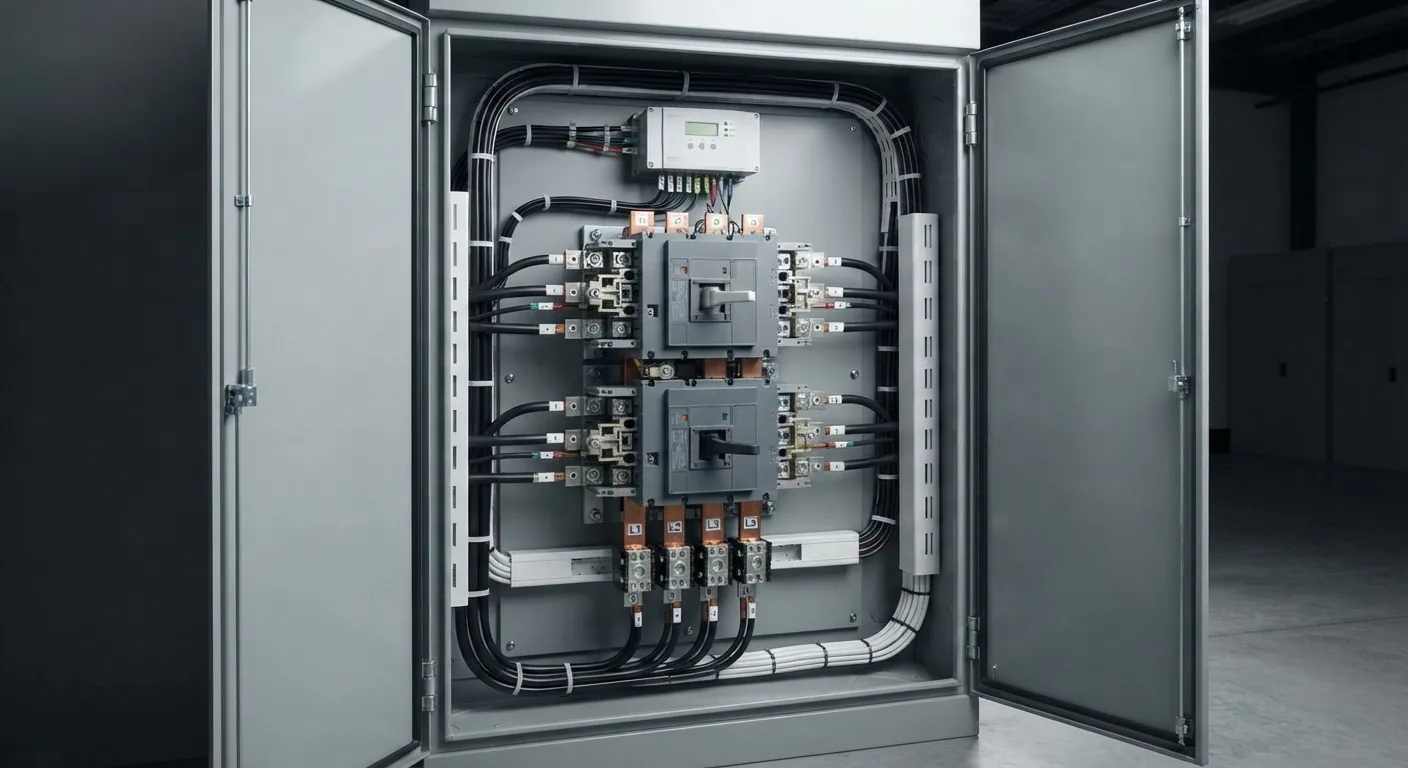
The heart of a synchronised system is the synchronising panel, with a section for each generator and a common busbar. Motorised breakers, synchronising and protection devices, PLC-based power management and a SCADA monitoring screen are designed together. JUTEK builds its synchronising panels in its own factory, writes the PLC/SCADA software in-house and commissions the system on site.
Can different generator brands run in parallel?
Yes – with suitable controllers and correct settings, generators of different makes and ratings can share a busbar. Because their governor and AVR responses differ, load sharing must be tested carefully during commissioning.
If you are considering a synchronised system for your site, we will review your existing generators and load profile and design the right solution with you.
Frequently asked questions
What conditions are needed to synchronise a generator?
Voltage, frequency, phase sequence and phase angle must match the busbar. A synchronising controller determines the moment of closure automatically.
Can generators of different brands run in parallel?
Yes, with suitable synchronising controllers and proper commissioning, generators of different makes and ratings can operate in parallel.